Iran, Afghanistan to expand agricultural, livestock cooperation
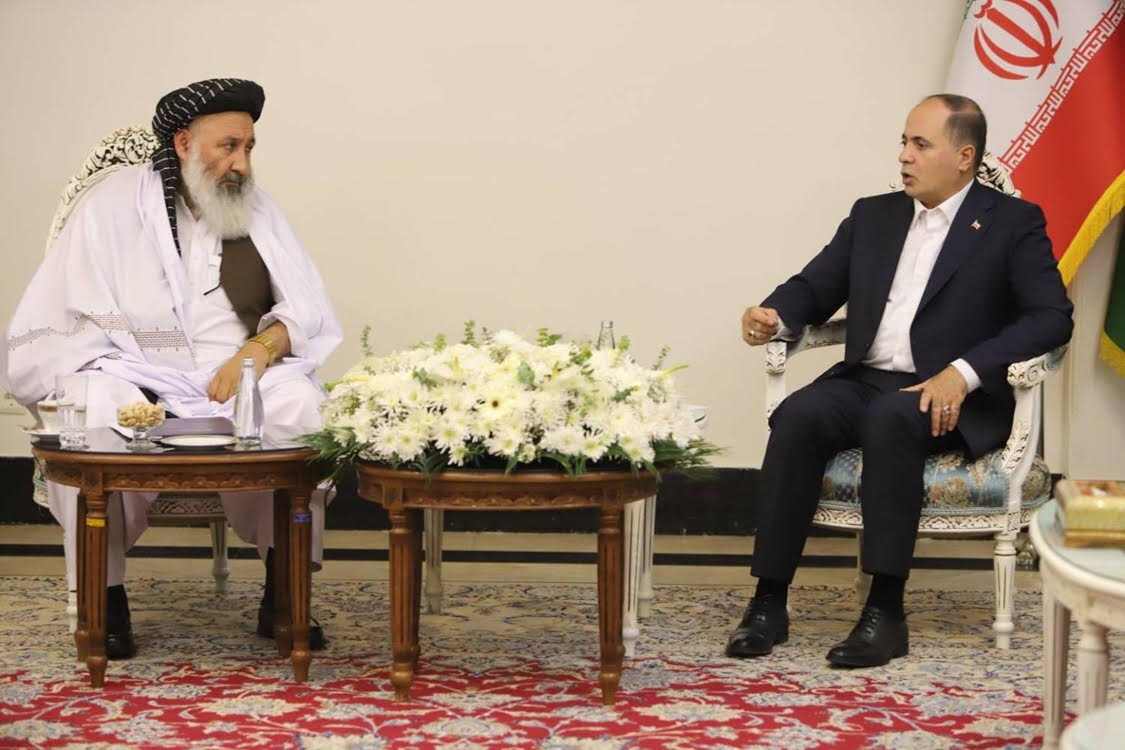
TEHRAN- Iranian Minister of Agriculture said: “Iran is ready to cooperate with Afghanistan in the fields of mechanization, livestock husbandry, agriculture, plant breeding, and livestock breeding.”
According to the portal of the Ministry of Agriculture, Gholamreza Nouri, on the evening of November 14, in a meeting with Mawlawi Mohammad Hassan Akhund, Afghanistan’s Minister of Finance and head of the Afghan side of the two countries’ Joint Economic Cooperation Committee, referred to Iran’s transit capacities and said: “Iran’s capacities for Afghanistan’s access to the Persian Gulf and open waters can serve the development of trade between the two countries.”
Referring to the transfer of part of Afghanistan’s goods to neighboring countries through Iran, he added: “These exchanges can increase. Capable investors are present in Afghanistan and can invest, especially in the Chabahar region, to establish terminals and port facilities so that the volume of Afghanistan’s commercial exchanges with the world in the fields of imports and exports increases.”
The Minister of Agriculture, emphasizing the necessity of strengthening economic cooperation between the two countries, said: “In the government, a special working group on relations with Afghanistan has been formed under the chairmanship of the First Vice President, and a number of relevant ministers are also members of it. Investment in various sectors of Afghanistan is among the issues that this working group is pursuing specially.”
Nouri, referring to the two countries’ shared capacities in the agricultural sector, considered mechanization, livestock husbandry, and agriculture to be among the fields susceptible to joint cooperation and stated: “We are ready to place whatever is produced in Afghanistan and needed by Iran on the priority purchase list, and to meet Afghanistan’s needs from our country’s production capacities.”
Referring to the fields of technical and specialized cooperation between the two countries, he continued: “In the fields of plant breeding, livestock breeding, supply of veterinary medicines and vaccines, and day-old chicks, we are ready to have the necessary cooperation with Afghanistan.”
The Minister of Agriculture also announced the readiness of Iran’s research centers to train Afghan experts and said: “Recently, a number of Afghan experts attended the country’s agricultural research centers and completed 10- to 15-day training courses. Our research centers are ready to accept experts from that country in accordance with Afghanistan’s needs and provide the necessary specialized training.”
Referring to the ban on poppy cultivation in Afghanistan, he listed cooperation in developing alternative crops as another important field of cooperation between the two countries and announced: “Iran is ready to help with the production of alternative products.”
Nouri considered facilitating traffic at shared borders and removing customs obstacles to be among the requirements for increasing trade exchanges and emphasized the necessity of round-the-clock customs activity, simplification of border formalities, increased transit traffic, and joint cooperation to combat smuggling.
Referring to the problems raised at the two countries’ border crossings during his trip to Kabul, he said: “After this trip, one of the deputies of the Ministry of Agriculture, along with representatives of executive bodies, visited the two countries’ borders, and continuous follow-ups are continuing to remove obstacles and increase the volume of border exchanges.”
The Minister of Agriculture announced Iran’s readiness to reopen the Yazdan border crossing and cooperate in activating border markets.
Emphasizing the necessity of making the Iran-Afghanistan Joint Economic Cooperation Committee more active, he said: “Good documents have been prepared for cooperation between the two countries, and their finalization and exchange can help increase exchanges. We hope that, with the follow-ups carried out, the seventh meeting of the two countries’ Joint Commission will be held in Kabul as soon as possible.”
Mawlawi Mohammad Hassan Akhund, Afghanistan’s Minister of Finance, also in this meeting, emphasizing the extensive capacities of Iran and Afghanistan for expanding economic exchanges and jointly combating smuggling, said: “The two countries’ joint fight against smuggling will strengthen legal trade.”
Stating that Afghanistan and Iran have numerous fields for cooperation and joint investment, he added: “In the sectors of agriculture, investment, mines, transportation, banking and financial cooperation, energy, and other economic areas, there are considerable capacities for cooperation that can be utilized through joint efforts.”
The head of the Afghan side of the Iran-Afghanistan Joint Economic Cooperation Committee considered investment in various economic sectors to be among other areas that can be pursued between the two countries and said: “Afghanistan has extensive and valuable capacities for investment in the sectors of mineral extraction, agriculture, production, energy, and economic infrastructure.”
According to the portal of the Ministry of Agriculture, Gholamreza Nouri, on the evening of November 14, in explaining the main points of the meeting with Mawlawi Mohammad Hassan Akhund, Afghanistan’s Minister of Finance and head of the Afghan side of the two countries’ Joint Economic Cooperation Committee, stated: “Today we hosted Afghanistan’s Finance Minister. Given that he heads the Joint Committee on behalf of Afghanistan and the Minister of Agriculture heads this commission on behalf of Iran, this meeting was held with the aim of providing the ground for holding the Joint Committee in Tehran.”
Referring to the review of current issues in the two countries’ economic relations, he added: “Border exchanges, customs activities, accelerating border traffic, and increasing the volume of exchanges with Afghanistan, both in imports and exports, were among the issues discussed and reviewed in this meeting.”
The Minister of Agriculture, stating that the Afghan side is interested in using Iran’s transit capacities to access the markets of other countries, said: “The Afghan side was also interested in playing a greater role in importing goods into Iran and exporting goods through our country. We also welcomed this and are ready to increase the level of cooperation and exchanges between the two countries.”
He announced the volume of trade exchanges between Iran and Afghanistan as about $2.7 billion and added: “Approximately one quarter of these exchanges is allocated to the agricultural sector. Given the trend underway in relations between the two countries and the numerous trips by officials of the Islamic Republic of Iran to Afghanistan and vice versa, it is predicted that this trend will soon accelerate and the volume of exchanges will increase.”
Nouri, referring to Afghanistan’s climatic capacities for developing agricultural activities, announced Iran’s readiness for cooperation in training and investment and stated: “Given the potentials that exist in Afghanistan’s climate, activity in the agricultural sector can develop, and suitable grounds for cooperation between the two countries are available.”
He continued: “We announced readiness to help in the fields of training and investment. Some Iranian companies have also announced readiness for a deeper presence in Afghanistan’s domestic production chains and for carrying out part of production activities in that country.”
The Minister of Agriculture, stating that this cooperation can, in addition to meeting the needs of the Afghan market, lead to the production of goods for consumption in Iran or for re-export, said: “This type of cooperation is both a transfer of technology and technical knowledge and leads to investment in the field of technical and engineering services.”
Nouri, in response to a question about supplying the wheat needed by guild and industrial units, also said: “This year, in the Market Regulation Headquarters, we allowed guild and industrial units to purchase wheat from domestic production so that they can procure their needed wheat themselves. Some of these units have also made purchases.”
Referring to the provision of the possibility of direct wheat imports for the first time by guild and industrial producers, he added: “We also liberalized wheat imports so that guild and industrial producers, who are consumers of flour, can import their needed wheat from any origin and with any quality. These units have taken measures in this regard, and part of the consignments has also reached the country.”
The Minister of Agriculture, stating that these changes have created new paths for supplying raw materials for the flour and food industries, stated: “A transparent process and new solutions compared with the past have been placed before these units. Of course, this decision affects their final cost, and the price of the wheat they receive will differ from the past based on the Market Regulation Headquarters’ approval; but on the other hand, the possibility of direct wheat imports and export of their products has also been provided for them.”
Referring to the high capacity of the flour industry and related food industries in the country, he emphasized: “Part of our capacities in the field of flour milling and flour-related food industries had remained unused, and with the provision of these conditions, the ground is provided for fuller use of the production capacity of these units.”
EF/MA
Leave a Comment